Anker Review 2026: Pricing, Features and Verdict
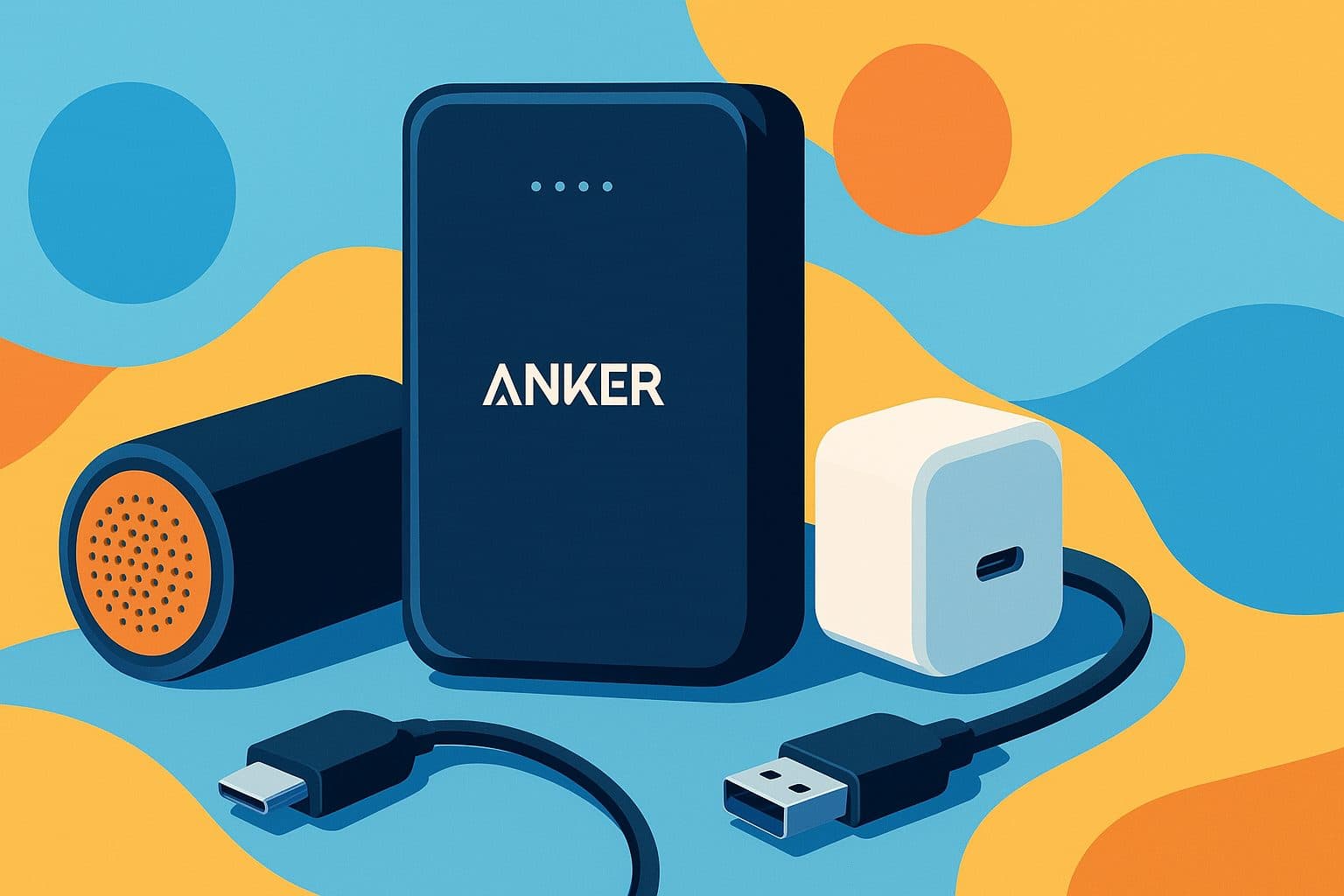
Is Anker worth it in 2026?
Yes, for most people shopping for charging accessories, Anker remains one of the safer default choices. It's built its reputation over years around fast-charging technology and broad device compatibility, and with a very large review base backing that reputation, it's a low-risk pick if you just need a power bank, wall charger or cable that works reliably across your devices. Where it's less of a slam dunk is if you're chasing the absolute cheapest option — Anker isn't typically the budget leader in its category, it's the trusted-middle-ground leader.
At a glance
| Category | Consumer electronics — charging technology and accessories |
| Standout feature | Proprietary fast-charging protocols with broad phone/laptop compatibility |
| Product range | Power banks, wall chargers, USB-C/Lightning cables, wireless chargers, car chargers, Bluetooth speakers, headphones, portable power stations (via Anker SOLIX) |
| Who it's for | Anyone who wants dependable charging gear without researching every spec sheet |
| Warranty | Multi-year limited warranty, varies by product line — check the specific product page |
What Anker actually is
Anker is a consumer electronics company best known for charging technology — portable power banks, multi-port wall chargers, USB-C and Lightning cables, wireless charging pads and car chargers. It's one of the more recognizable names in third-party mobile charging accessories, largely because it's built its lineup around fast-charging technology, including proprietary charging protocols used across many of its devices, paired with broad compatibility across phones, laptops and other USB-powered gadgets.
The brand's catalog has grown well beyond basic chargers, too. It now covers portable Bluetooth speakers and headphones for everyday audio use, and — through its Anker SOLIX sub-brand — portable power stations aimed at backup power and outdoor use. That expansion means Anker increasingly functions as a one-stop shop for anyone building out a "power and audio" accessory kit, rather than a company you'd only think of for a single power bank.
Pricing and value
Anker's pricing wasn't broken out by specific product line in the data available for this review, and the brand spans a wide range of categories (basic cables through power stations), so a single price point wouldn't be meaningful here. What is clear is the value proposition: Anker sits in the premium-but-accessible tier of charging accessories — priced above generic no-name chargers, but positioned as a safer long-term buy thanks to its reputation for reliability and its layered, multi-year warranty coverage that varies by product line.
Who it suits, and who should skip it
Anker makes the most sense for people who want to standardize their charging setup across multiple devices and locations — one brand for the desk charger, the car charger, the travel power bank and the cable bag — without researching a different manufacturer for each item. Frequent travelers and remote workers who rely on their phone and laptop staying charged throughout the day are a natural fit, as are households that just want charging gear that keeps working reliably for years without a second thought. The addition of Anker SOLIX power stations also makes the brand relevant to anyone thinking about backup power or outdoor/off-grid use, not just everyday phone charging.
If you're an extreme budget shopper who only cares about the lowest possible price per cable or per power bank, Anker is probably not going to be your first choice — there are cheaper no-name alternatives that will technically do the job. Anker's pitch has always been reliability and longevity over rock-bottom pricing, so shoppers optimizing purely for upfront cost should compare carefully before assuming Anker is the best deal for their specific need.
Pros
- Very large, established review base backing its reliability reputation
- Fast-charging technology with broad compatibility across phones and laptops
- Wide product range means you can standardize your whole charging setup (bank, wall charger, cables, car charger) on one brand
- Multi-year limited warranty on many products
- Expanded catalog (speakers, headphones, SOLIX power stations) covers more than just charging
Cons
- Not typically the cheapest option in any given accessory category
- Warranty length and terms vary by product line, so you need to check the specific product page rather than assuming one blanket policy
- With such a broad catalog, quality/reputation can feel more consistent in its core charging line than in newer categories like audio
If you're ready to buy, it's worth checking current Anker coupons and deals first — with a catalog this wide, an active discount can meaningfully change the price on a power bank, cable bundle or speaker.
Building a charging setup around Anker
One practical advantage of Anker's breadth is that you can effectively standardize an entire household or travel kit on one brand: a multi-port wall charger for the desk, a compact power bank for the bag, a car charger for the commute, and matching USB-C cables for all of them, so you're not mixing chargers of unknown wattage and compatibility. That consistency matters more than it sounds — using an underpowered or incompatible charger with a modern fast-charging phone or laptop can mean much slower charging than the device is actually capable of, and Anker's proprietary fast-charging protocols are designed specifically to avoid that mismatch across its own product line.
Verdict
Anker earns its reputation honestly: it's not chasing rock-bottom prices, it's chasing dependability, and for charging accessories that's usually the trade-off worth making. If you want gear that just works across your phone, laptop and other USB devices without digging into spec sheets, Anker is a safe, well-reviewed default. Shoppers hunting for the absolute cheapest cable or bank should look elsewhere, but anyone weighting reliability and compatibility highly will likely be satisfied.